

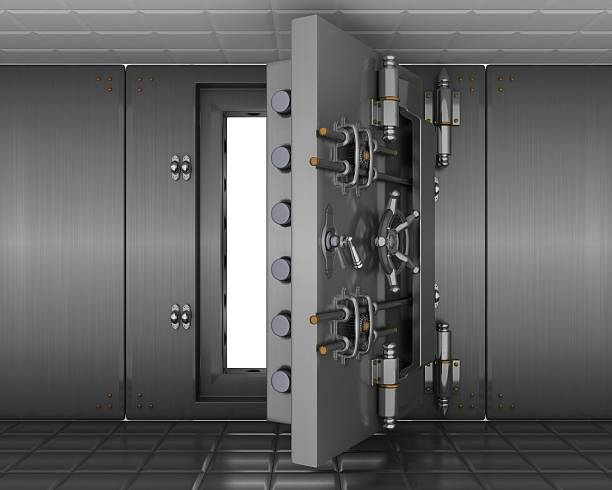
Purchasing a bank vault door is one of the most consequential security decisions your institution will make. Get it wrong and you’re looking at more than a financial loss — you’re risking regulatory penalties, failed audits, and the kind of reputation damage that takes years to recover from. Get it right and you have a decades-long asset that protects your people, assets, and operations around the clock.
This guide walks you through everything that matters: the difference between vault and safe doors, how UL and TL ratings actually work, what to look for in boltwork and locks, how to measure and plan for installation, and how to calculate the true cost of ownership. Whether you’re upgrading a community branch or outfitting a regional cash-processing center, LastingSafe has the expertise and inventory to match you with the right solution.
Vault Door vs. Safe Door: Know the Difference
These terms are often used interchangeably, but they describe fundamentally different products.
A bank vault door is engineered to secure an entire room-sized vault. It integrates directly with reinforced walls and floors, features a significantly larger clear opening, and supports heavyweight boltwork along with sophisticated relocking systems. If you’re protecting a teller vault, cash-processing room, or a full branch vault, this is what you need.
A safe door, by contrast, protects a smaller standalone container. It’s appropriate for safe deposit lockers or compact secure storerooms where space and budget are more constrained.
Choosing the wrong category from the start leads to costly retrofits. Clarify your use case before you start comparing specs.
Common Configurations and When to Use Them
Single-door vaults are the standard configuration for most branch vaults straightforward, well-supported, and appropriate for the majority of installations.
Double-door and mantrap configurations create a controlled entry corridor that requires staff verification before granting full vault access. These are used where an additional layer of human authentication is required before entry.
Modular vault systems use prefabricated panels and doors for faster installations and retrofits. Ideal when you’re working within an existing building footprint that can’t accommodate major structural changes.
High-security vault doors are specified for high-value cash centers, regional cash-processing facilities, or any location with an elevated threat profile. Expect thicker steel plates, higher TL ratings, and more sophisticated relocking mechanisms.
Fire-rated vs. burglary-rated doors serve different primary purposes. Fire-rated doors prioritize heat and smoke resistance to protect documents, media, and sensitive equipment. Burglary-rated doors (UL/TL-rated) are built to resist forced entry and tool attacks. Many facilities need both look for doors that carry combined fire and burglary certifications.
Swing vs. sliding doors come down to your available clearance. Swing doors dominate traditional vault installations. Sliding doors are the practical solution for tighter spaces or where a heavy door’s swing arc would create operational problems.
Understanding UL and TL Ratings
When you see a “UL-rated vault door” on a spec sheet, you’re looking at a product that has been independently tested for forced-entry resistance. Here’s what the key ratings actually mean:
TL-15 — The door withstood a timed attack using specified tools for 15 minutes under controlled test conditions.
TL-30 — Same methodology, extended to 30 minutes of sustained attack resistance.
These aren’t marketing claims — they’re verified by third-party testing and listed in UL’s official directory, which you should always cross-reference when evaluating a purchase.
As a general benchmark: retail branch locations often require RSC or lower UL ratings, while cash-processing centers typically demand TL-30 or higher. Your threat model — the realistic risks your specific facility faces — should determine which rating you specify, not general convention.
What Fire Ratings Actually Mean
Fire ratings measure how long a vault door protects its contents from heat and smoke, expressed in minutes or hours (60 minutes, 120 minutes, and so on), and tested to standards like ASTM E119.
A 60-minute fire rating is typically sufficient for document protection. If you’re storing digital media, magnetic records, or sensitive electronics, you’ll likely need longer protection those materials can be damaged at temperatures well below what would harm paper documents.
Some vault doors carry combined burglary and fire ratings. Others require additional insulated panels or secondary seals to achieve fire protection alongside their forced-entry resistance. Always confirm what’s included in the rating and what requires supplemental components.
Insurance and Regulatory Requirements
Before you finalize any specification, talk to your insurance carrier. Many insurers mandate specific certifications or minimum resistance grades (B, C, RSC) that directly affect your premiums and your eligibility to file claims. A door that doesn’t meet those thresholds can void coverage on a loss.
For higher-risk sites, regulators and law enforcement guidance may require or strongly recommend TL-rated doors, certified relocking devices, and documented UL listings. Build this verification step into your procurement process early — not after you’ve already selected a product.
Boltwork and Relockers: The Mechanical Core
The boltwork is what physically holds a vault door shut against attack. When comparing options, look at:
- Number of bolts — more bolts distribute resistance across more contact points
- Bolt diameter — larger bolts resist shearing and leverage attacks more effectively
- Bolt throw — the distance bolts extend into the frame; deeper engagement means more material an attacker must defeat
Independent mechanical relockers are a separate but equally critical system. These activate automatically if the lock mechanism is tampered with or compromised, preventing an attacker from defeating the primary lock and then simply prying the door open. Verify that the relockers in any door you’re considering have certified, documented performance — and that their placement makes them genuinely difficult to defeat from outside.
Locks: Mechanical vs. Electronic
Both mechanical and electronic locks have legitimate roles in bank vault security, and the right choice depends on your operational requirements.
Mechanical combination locks remain the standard for reliability and are frequently required by insurers. They have no batteries to fail, no software to update, and a long track record.
Electronic locks add capabilities that mechanical locks can’t match: audit trails, time-delayed access, remote management, and real-time alerts. For high-security or high-throughput facilities, these features have genuine operational value.
Dual-custody setups requiring two authorized individuals to open the vault can be implemented with either lock type or with a combination of both. For sensitive facilities, dual-lock configurations that combine mechanical and electronic authentication provide redundancy and accountability.
When evaluating any lock, confirm: key-change procedures, tamper detection capabilities, battery fail-safes (for electronic locks), and the certified grade of the lock itself.
Anti-Drill, Hinge, and Frame Protection
A vault door is only as strong as its weakest point. The door panel rating means nothing if an attacker can defeat the hinges or drill through the lock mechanism.
Look for anti-drill plates made from hardened steel or composite materials positioned to protect the lock mechanism and relockers. Concealed or reinforced hinges eliminate a common attack vector. And robust frame construction that ties into the surrounding wall structure is essential the frame must resist bolt pull-through and allow full engagement of the boltwork.
Frames should be specified to match the door’s resistance rating. A TL-30 door in an inadequate frame is not a TL-30 installation. Inspection ports and accessible test panels also matter for long-term serviceability technicians need to verify internal components without full disassembly.
Integration with Alarms and Access Control
A vault door doesn’t operate in isolation. It needs to function as part of your building’s broader security infrastructure. Before finalizing a purchase, confirm:
- Wiring paths for alarm and access control integration
- Sensor compatibility (magnetic contacts, vibration sensors, tamper detection)
- Event logging and audit trail requirements
- Automatic lockdown procedures linked to central monitoring
Integrated systems reduce response times when something goes wrong and create the
documentation trail that insurers and auditors expect to see.
How to Measure for a Vault Door
Accurate measurements before procurement prevent costly surprises during installation. Capture:
- Clear opening dimensions — width, height, and depth of the opening
- Wall thickness — and the materials involved (concrete, CMU, steel)
- Finished floor elevation — and whether you have or can create a recessed sill or pit (required for some heavy sliding doors)
- Swing clearance — the full arc of a swing door, including any overhead obstructions
- Structural details — floor slab thickness, nearby utilities, conduits, or reinforcement that could interfere with anchoring or frame installation
If you’re retrofitting an existing space, bring in a structural engineer before finalizing your specifications.
Installation: What to Plan For
Installation is where many vault door projects encounter unexpected costs and delays. Plan for these issues before they become problems:
Wall and floor reinforcement is frequently required in retrofit projects. Concrete coring, poured-in-place frames, and structural steel additions are common and require permits, engineering review, and additional budget.
Existing frame inspection matters if you’re considering reusing an old frame to save money. Hidden corrosion, dimensional drift, and insufficient bolt engagement are common problems. When in doubt, full frame replacement is the lower-risk choice.
Delivery logistics for heavy vault doors typically require forklifts or cranes and clear exterior access. Confirm door weight with your vendor and plan delivery windows to avoid disrupting branch operations.
Lead times for custom and UL-rated doors typically run 8 to 16 weeks. Build that into your project schedule and procurement timeline, especially if installation needs to align with an audit window.
Permits and inspections local building codes, fire department requirements, and insurer notification rules all apply. Include acceptance testing and formal inspection checkpoints in your contract scope.
For branch continuity, schedule major work after hours or on weekends, and arrange temporary secure storage (night-drop controls, temporary safes) to maintain operations during installation.
Three Real-World Scenarios
Community Branch Upgrade
A small community bank needed to replace an aging vault door within a tight budget and without structural modifications. The right solution was a UL-rated RSC door with a 60-minute fire rating, a mechanical combination lock, mid-sized boltwork, and a refurbished frame. Installation completed over a single weekend. The insurer accepted the upgrade, the bank maintained branch uptime, and the project came in on budget. Sometimes the right door is the one that meets your actual requirements — not the most heavily specified option available.
Regional Cash-Processing Center
A high-throughput cash center needed maximum forced-entry delay against a serious threat profile. The specification called for a TL-30 vault door, multiple large-diameter bolts, independent mechanical relockers, electronic dual-custody access, anti-drill plates, and full integration with the building’s alarm and CCTV systems. The facility met insurer and audit requirements, reduced risk exposure, and gained faster incident response through integrated monitoring.
Historic Building Retrofit
A downtown branch in a protected historic building needed modern vault protection without alterations to original masonry or flooring. A modular vault panel system with a sliding vault door, custom sill fabrication to avoid cutting original floors, and concealed frame anchoring achieved full compliance without compromising the building’s historic designation. Preservation documentation was submitted and approved alongside the security upgrade.
Checklist: What to Confirm Before You Buy
Before signing any contract, verify the following with your vendor:
- UL/TL rating matches your threat model and insurer requirements
- Fire rating is appropriate for the materials you’re protecting
- Boltwork specifications (number, diameter, throw)
- Certified relocker performance and placement
- Lock type, grade, and dual-custody capability if required
- Anti-drill, hinge, and frame protection specifications
- Alarm and access control integration plan
- Installation scope: structural work, permits, delivery logistics
- Lead time and project schedule alignment
- Warranty coverage and post-installation service terms
Final Thoughts
The right bank vault door is the one that matches your specific threat level, site constraints, regulatory requirements, and long-term operational needs not simply the lowest-priced option that clears a basic threshold.
Start with your required ratings, confirm the mechanical and electronic features that your insurer and auditors expect, and validate your vendor’s credentials, installation plan, and warranty terms before you commit.
LastingSafe offers the product range, technical expertise, and installation support to guide you through every step of this process from initial specification to final inspection. Reach out to their team to discuss your project and request a quote.
