

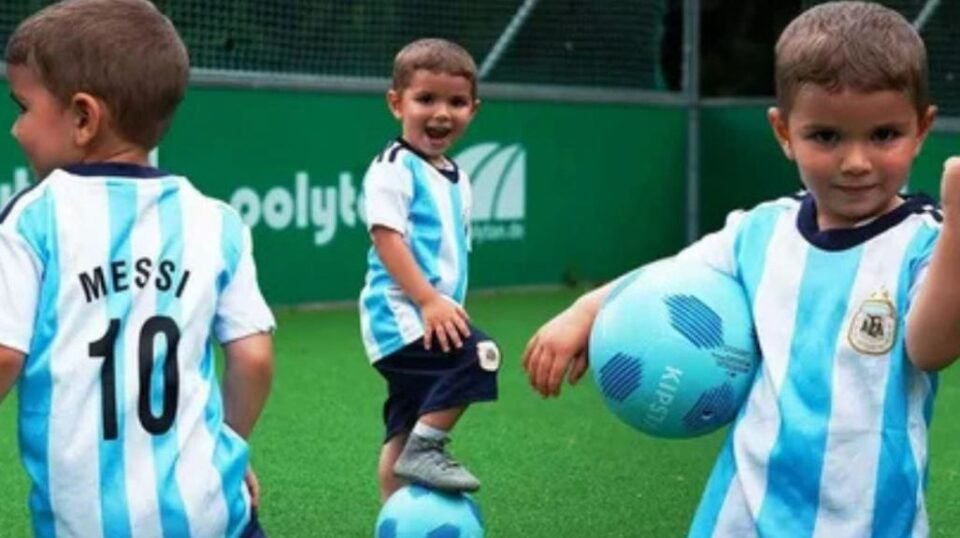
First exposure to sport can have an impact on a child’s attitude towards physical activity for years. Children will readily take part when training is enjoyable, is of an age-appropriate level, and is warm and friendly. If the sessions are very demanding or about just winning, the children lose interest in the game before they even have a chance to have fun.
Kicking a ball isn’t all that soccer is about for children. It stimulates movement, communication, decision-making, a nd cooperating. Many of these benefits, however, are strongly reliant on the manner of introduction of the sport. Young kids need patient coaches who know how the youngster is developing physically, emotionally, and socially.
Sydney coaching for soccer families can rely on quality coaches to provide a safe setting in which kids can learn without undue pressure. Super Best Friends: In this phase, young players are initially introduced to soccer through play and learn, clear instructions, and age-appropriate challenges that will allow them to develop their soccer skills while having fun during all sessions.
Soccer Training Details
When your child starts playing soccer, there’s no need to use fancy drills or tactics. They must create an environment for getting to know the ball, the movement, and how to interact with it encouragingly.
A good coach is able to translate simple skills into play. Coaches can design activities for the kids so they don’t have to line up and wait for their turn. This will keep children involved and get them to practice basic ball control and coordination.
A positive introduction can entail:
- Running and stopping safely
- Kicking towards large targets
- Running at speed with basic dribbles
- Following short instructions
- Sharing equipment
- Taking turns with other players
- Recognising effort and progress
Although these seem very easy, they are the basis for future development. Most importantly, they assist kids to see something great about sport, but not pressure.
When choosing the best soccer academy Sydney has to offer, parents should consider an academy that prioritises the child’s experience.
Age-Appropriate Training Supports Growth
Every child’s development is unique and individual. There’s a difference between setting the expectations and activities of a 4-year-old beginner and those of an eight-year-old beginner.
Children under that age may have shorter attention spans and are not fully developed in their abilities to control their bodies. Kids’ soccer in Sydney is available in programs that should consist of short, creative exercises with plenty of movement involved. Children could be asked to take turns manoeuvring the ball around ‘islands’, to kick towards colour targets, or move like various animals.
In these games, toddlers can practice balance and coordination skills, as well as spatial sense, without taking the experience of a formal lesson.
Older children can be ready for more structured passing, dribbling, and small-sided games. They can start learning the skills of going in and out of space, communicating, and making decisions under light pressure.
Quality coaching catering to activities for the developmental needs of the age groups. It does not assume a single rate of achievement or learning in all children.
Professional Coaching for Kids
The fundamental skills mastered early can ease future development. With clear instructions, children will have a better understanding of how to control the ball and pass with accuracy and safe movement.
The good soccer training Sydney programs first teach basic skills, then move on to advanced tactics. Typically,y these foundations contain:
- Basic ball control
- Dribbling with both feet
- Short passing
- Shooting technique
- Balance and coordination
- Awareness of space
Running, jumping, and throwing
Each activity is modelled by the professional coach using words children will be able to understand. They dissect a skill into manageable bite-sized chunks and give players sufficient time to practise.
Fixing students’ errors should be done with a positive attitude, too. The coach shouldn’t just tell a player they are incorrect, but rather what they need to adjust and get them to try again. Providing a way for children to improve without being embarrassed.
It’s not the objective to make “perfect” players overnight. It is to build trustworthy bases in order to support their progress as they grow.
Helping kids develop and build confidence
Confidence will grow when children are faced with challenges that they are able to overcome. While kicking the ball in the desired direction may be difficult for the young player, practice over time will help them become more and more in control.
Every success provides the little one with proof that he is a student. This positive self-belief can carry over from soccer and impact them in other areas: in school, with family and friend groups, etc.
Supportive coaches acknowledge a range of progress. One kid might engage in a new after-school sport, or another kid might score a goal. These are both worthwhile accomplishments that warrant praise.
A good soccer academy in Sydney will not necessarily involve just the strongest or most experienced players. All children deserve to be treated and given opportunities to take part.
Super Best Friends prioritizes the healing of young players to make them feel included and able to do. In a culture of effort, children are supported in trying, making mistakes, and learning more.
Tackling team activities helps build valuable social skills
Soccer is a team sport and is a good opportunity for children to learn about communication and cooperation.
Children learn to listen to a coach and wait for their turn to play during training, and share space with others. Small games lead to these understandings: passing to teammates, understanding rules, and responding to the play of other players when they have the ball.
These experiences can help children prepare for preschool/school. Gain greater ease in interacting within a group and following directions from adults outside the family.
A rich, organized kids’ soccer course in Sydney can teach kids to:
- Communicate with teammates
- Work together towards a common objective
- Respect other players
- Handle minor disagreements
- Be supportive of another child’s achievement
- Take a pragmatic approach to failure
- Seek assistance if necessary
These behaviours will not be mastered in an instant by young children. A good coach gives them the chance to practise them several times and sets the example for good communication in the session.
QC’s Keep Competition in Perspective
Competition is a natural aspect of soccer, and should be carefully introduced. Young players still have some developmental issues with knowing how to deal with big feelings and the implications of winning and losing.
A child-focused program does not rely on competition as a sole pathway to success, but as a learning experience. Coaches can facilitate mini games whilst still reinforcing teamwork, effort, and good decision making.
Children develop a good understanding of enjoying winning without becoming disrespectful, and losing without feeling they have failed. They also learn that in sporting activities, making mistakes is a regular occurrence.
It could lead to children feeling anxious or comparing themselves all the time if it is poorly managed, with a competitive nature. Quality coaches alleviate this stress by keeping training inclusive and fun.
Parents should take into account an academy’s approach to performance. Prioritizing results is important in a program for young children, but development should still be encouraged.
Physical wellbeing
Exercise is an important part of a child’s development. Soccer helps children to run, change direction, balance, and coordinate various movements.
Activity helps develop:
- General fitness
- Agility and balance
- Coordination
- Body awareness
- Movement confidence
Healthy activity habits
Playing soccer can be particularly attractive as children are thinking about games and the ball instead of other aspects of the session as a ‘workout’.
A competent coach will ensure activities progress and will allow appropriate rest periods. They also provide sufficient room for children to play safely and discuss boundaries in an understandable language.
Positive exercise experiences can make children see exercising as a regular part of life and something worthwhile. This can encourage them to continue being active for a longer period of time.
Coaches Help Children Develop Resilience
There are multiple situations in between in soccer. A target may be missed, children may lose control of the ball, or they may have some difficulty with a specific activity. These are opportunities for coaches to help their players learn to “react” positively.
The supportive coach does not take all of the challenges away. Rather,r they encourage and offer assistance to the child to break the task into smaller steps.
Supporting children through manageable difficulties allows them to see that it is okay to make a mistake and give up. They can stop, make adjustments, and start over.
In this process, resilience is worked on. The child starts to learn how to be patient, knowing that betterment follows and that one can overcome eventual frustrations.
So, good coaching courses in Sydney produce more than just the ability to play well. They support children to practice their persistence in a safe and supportive environment.
Important Points Parents Should Note in A Soccer Academy
When enrolling in a soccer program,m there is plenty more to consider than just cost or location. It is important for parents to think about the setting of their child’s academy and how appropriate this is to their age and personality.
A good program ought to provide:
- Coaches who are patient when talking with children
- Activities suitable for specific age groups
- Safe and orderly training habitat
- Opportunities for all players to play
- There’s a balance of skill-building and fun.
- Parents can communicate effectively.
- Positive behaviour management
- Practical goals for the younger novice.
Parents may also wish to sit in on a session. Where children become distracted or ‘fearful,’ coaches should remain calm and not use this as a motivational tool.
Super Best Friends offers soccer programming that meets the needs of young children. Its sessions encourage children to learn via movement, play, and positive interaction,n and not as an ‘adult athlete.
Parents need to focus on the coaching process
Whether parents and coaches are able to share their journey successfully to build a positive experience depends on their collaboration. When children receive the right messages at home, the supportive approach used during training is beneficial to children.
Parents may discuss with their child, after the session, what they enjoyed or learned. It is important to ask questions about effort and experience rather than beginning by asking how many goals they have scored.
Parents should avoid comparing their child with other players. Some kids pick up skills rather rapidly, while others may first need to feel at ease in a group.
But regular attendance can help as well. Children have established routines allowing them to develop relationships with their coaches and become more independent.
Parental praise and recognition of involvement and progress make it more likely that children will stay motivated.
Final Thoughts
The trust and values of young players in relation to sport, working together, and personal growth are influenced by quality soccer coaching. A good coach will be able to teach and help in basic techniques and help a child improve in confidence, communication, and resilience.
For parents, the peak soccer academy Sydney has to offer won’t always be the one that assures them of the largest number of wins. It will be the one who knows kids, is able to make sessions interesting, and ensures that each player gets to know their growth that matters.
Super Best Friends teaches the little ones about soccer through activities and positive coaching suitable for their age. The academy ensures children remain in a fun and inclusive learning environment, developing a positive relationship with the movement, with their teammates, and with the game.
Frequently Asked Questions
At what age can children start soccer coaching?
Children can begin simple soccer activities during their toddler years. Training should focus on movement, play,y and familiarity with the ball rather than formal competition.
Does a beginner need their own soccer equipment?
Requirements vary between programs. Comfortable sports clothing, appropriate footwear,r and water are commonly needed, while academies may provide balls and other training equipment.
How often should young children attend soccer training?
One regular session each week may be suitable for many beginners. The ideal frequency depends on the child’s age, interest, and other commitments.
Can soccer coaching help shy children?
Yes. Supportive group activities can help shy children become more comfortable communicating and participating with others at their own pace.
What makes a good junior soccer coach?
A good junior coach is patient, encouraging, ng and able to adapt activities to different ages and abilities. They should value safety, inclusion, effort, and enjoyment.
