

I still remember the first time I tried to ship something internationally. I was helping a small business owner who’d just landed her first overseas order and was absolutely thrilled. Until we actually sat down to figure out how to send it. The excitement gave way to confusion pretty quickly. Customs documents. Incoterms. Freight forwarders. HS codes. It felt like everyone in the industry was speaking a different language and nobody had written a dictionary for the rest of us.
That experience is what eventually led me to dig deep into international logistics. And what I found is that it’s really not as complicated as it first appears. Once you understand the basic building blocks, it starts to make a lot of sense. So if you’re staring down your first international shipment and feeling a bit lost, this guide is the one I wish existed back then.
Understanding the Basics: What International Shipping Actually Involves
At its core, international shipping is the process of moving goods from one country to another. But unlike sending a parcel across town, it involves crossing borders, dealing with customs authorities, complying with import and export regulations, and coordinating multiple parties across different countries and time zones.
A typical international shipment touches several hands before it reaches its destination. Your goods leave your premises, move to a port or airport, travel across oceans or skies, arrive at a foreign port or airport, clear customs in the destination country, and then make their way to the final recipient. Each of those steps involves paperwork, fees, and decisions that you as the shipper need to understand.
The good news is that you don’t have to manage all of this yourself. That’s what freight forwarders are for. But understanding what’s happening at each stage means you can make better decisions, avoid expensive mistakes, and have more informed conversations with the people helping you.
The Main Shipping Methods
Your first big decision is how your goods are going to travel. The main options are sea freight, air freight, and in some regions, rail freight. Each has its place depending on what you’re shipping, where it’s going, and how quickly it needs to arrive.
Sea Freight
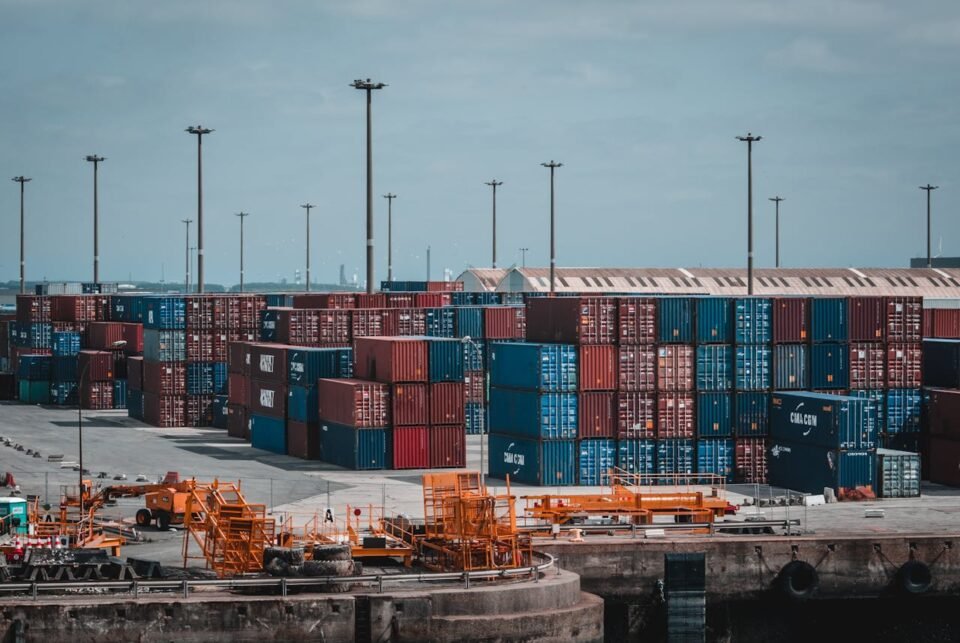
Sea freight is the backbone of global trade. The vast majority of physical goods that cross international borders do so by container ship. It’s the most cost-effective option for larger shipments, but it’s also the slowest.
Within sea freight, you have two main options. FCL, which stands for Full Container Load, means you fill an entire shipping container yourself. It’s more economical per unit for larger volumes and your goods travel in a sealed container without being mixed with anyone else’s cargo. LCL, which stands for Less than Container Load, means your goods are consolidated with other shippers’ cargo inside a shared container. It costs less upfront but typically takes longer because of the consolidation and deconsolidation process at each end.
Transit times for sea freight between major trade routes typically range from a few days for short regional routes to several weeks for long-haul journeys between continents. Sydney to Los Angeles, for example, is generally around three to four weeks by sea. Sydney to Rotterdam in the Netherlands is closer to five to six weeks.
Air Freight
Air freight is faster and considerably more expensive. For time-sensitive shipments, high-value goods, or perishables, it’s often worth the additional cost. For bulk commodity shipments, it rarely makes financial sense.
Air freight transit times are measured in days rather than weeks. Sydney to London might be two to three days by air. Sydney to Singapore can be done in a day.
Courier Services
For smaller packages and samples, international courier services like DHL, FedEx, UPS and TNT handle a lot of the customs and documentation requirements on your behalf. They’re more expensive per kilogram than freight options but significantly simpler to use, which makes them ideal for getting started or for sending smaller quantities while you’re testing new markets.
What a Freight Forwarder Does and Why You Probably Need One
A freight forwarder is essentially your logistics manager for international shipments. They don’t typically own ships or planes but they have relationships with the carriers that do, and they coordinate all the moving parts of your shipment on your behalf.
A good freight forwarder will book cargo space with carriers, prepare and manage shipping documentation, arrange customs clearance at origin and destination, coordinate pickup and delivery, advise on packaging and labelling requirements, help you understand the regulations of your destination country, and navigate any problems that arise along the way.
For anyone new to international shipping, working with a freight forwarder is strongly recommended. The cost of their service is almost always justified by the time saved and the mistakes avoided, particularly when you’re learning how it all works.
When choosing a freight forwarder, look for one with specific experience in your destination country and your type of cargo. Ask about their relationships with customs brokers in the destination country, how they handle problems when shipments are delayed or held at customs, and what their communication process looks like. A forwarder who goes quiet when things go wrong is not the one you want.
The Australian Federation of International Forwarders, known as FIATA’s Australian affiliate, and the Freight and Trade Alliance both provide resources for businesses navigating international logistics. The Australian Border Force at abf.gov.au also publishes import and export guidance that is worth bookmarking from the start.
Understanding Incoterms
Incoterms is a term you’ll encounter almost immediately in international shipping, and it’s one worth understanding properly because it determines who is responsible for what throughout the journey.
Incoterms, which stands for International Commercial Terms, are a set of standardised trade terms published by the International Chamber of Commerce. They define at what point in the shipping journey the responsibility and cost transfers from the seller to the buyer.
The most commonly used Incoterms in practice are:
EXW, or Ex Works, means the seller’s responsibility ends at their premises. The buyer arranges and pays for everything from there, including pickup, export clearance, freight, import clearance and delivery.
FOB, or Free on Board, means the seller is responsible for getting the goods to the named port of origin and loaded onto the ship. From that point, the buyer takes over responsibility and cost.
CIF, or Cost, Insurance and Freight, means the seller arranges and pays for freight and insurance to the destination port, but the buyer takes responsibility once the goods arrive at that port.
DDP, or Delivered Duty Paid, means the seller handles everything including import duties and delivery to the final destination. It’s the simplest arrangement for the buyer but the most complex and expensive for the seller.
Getting your Incoterms right from the start matters because they determine who buys insurance, who arranges transport, who handles customs clearance, and who bears the risk if something goes wrong at each stage. Many disputes in international trade come down to a misunderstood or incorrectly applied Incoterm.
Customs, Duties and Import Taxes
Every country has its own customs regime and this is where international shipping gets most complicated for beginners.
When goods arrive in a country, customs authorities check that they comply with local regulations, verify their declared value, and apply any applicable import duties and taxes. Getting this wrong can mean your shipment being held, additional costs, or in serious cases, goods being seized or returned.
HS Codes
Every product that crosses an international border needs to be classified with what is called a Harmonised System code, or HS code. This is a standardised numerical code that identifies what the product is. The code determines which import duties apply, whether any restrictions or licences are required, and how the goods are treated by customs.
Finding the correct HS code for your product is important and worth spending time on. The wrong code can lead to incorrect duty rates, delays at customs, or penalties. The Australian Border Force and the Australian Taxation Office both provide guidance on HS code classification. For the destination country, your freight forwarder or customs broker will typically assist with this.
Import Duties and Taxes
Import duties are taxes applied by the destination country on the value of incoming goods. The rate varies by country and by product type. Some goods attract no duty. Others can attract duties that significantly change the economics of the transaction.
On top of import duties, many countries apply their local equivalent of GST or VAT to imported goods. In Australia, for example, the GST threshold for imported goods has changed in recent years and goods above certain values are subject to standard GST.
Understanding the duty and tax situation in your destination market before you price your goods is essential. A product that looks profitable at first glance can become uneconomical once import duties and local taxes are factored in.
Prohibited and Restricted Goods
Every country has lists of goods that cannot be imported at all and goods that can only be imported under specific conditions or with specific licences. Agricultural products, certain chemicals, medications, food items, plants, and animal products are commonly regulated categories.
Before shipping anything internationally for the first time, check the import regulations for your specific product in the destination country. Your freight forwarder should be able to advise on this, and the destination country’s customs authority website is the authoritative source.
The Documents You’ll Need
International shipping involves a fair amount of paperwork. Here are the main documents you’ll encounter regularly:
A commercial invoice is the fundamental document for any international shipment. It describes the goods, their value, the buyer and seller details, and the terms of the transaction. It needs to be accurate because customs authorities use it to assess duties and verify the shipment.
A packing list details exactly what is in each package, including weights and dimensions. It accompanies the commercial invoice and helps customs and logistics teams verify the contents of a shipment.
A bill of lading for sea freight, or an air waybill for air freight, is essentially the contract of carriage between the shipper and the carrier. It confirms that the goods have been received and describes the terms under which they’ll be transported. It also serves as a title document for the goods.
A certificate of origin confirms where the goods were manufactured. Some trade agreements provide preferential duty rates for goods originating in certain countries, making this document important for managing costs. It also helps customs authorities verify claims about where goods come from.
Some products require additional certificates. Food products may need health certificates. Certain materials may need safety certifications. Your freight forwarder and the destination country’s import regulations will tell you what applies to your specific shipment.
Packaging and Labelling
Packaging for international shipments needs to be more robust than you might think. Goods spend weeks in transit, are moved multiple times by different handling equipment, may be stored in temperature and humidity conditions different from their origin, and need to survive being stacked, jolted, and in some cases, inspected by customs officers who will need to open and repack things.
Over-engineering your packaging is usually the right call on your first few international shipments. The cost of a damaged shipment, in both money and customer relationship terms, is almost always higher than the cost of slightly heavier or more durable packaging.
Labelling requirements vary by country and product type. As a general rule, labels need to be in the language of the destination country for consumer products, display the country of origin, include any mandatory safety or regulatory markings required by that market, and carry the correct HS code and customs information.
Insurance: Don’t Skip This
International shipments are exposed to more risk than domestic ones. At sea, goods can be damaged by water, shifting cargo, or in rare cases lost entirely. In air freight, goods can be damaged in handling. At customs, delays can cause problems for perishables or time-sensitive products.
Cargo insurance covers you for loss or damage during transit. The cost is typically a small percentage of the shipment value and it is almost always worth it. Many first-time shippers skip it to save a few dollars and regret it the one time something goes wrong.
Check whether your freight forwarder offers cargo insurance as part of their service, or whether you need to arrange it separately. Read the policy carefully to understand what is and isn’t covered.
Understanding Your Costs
International shipping costs can feel unpredictable until you understand what goes into them. The main cost components are:
Freight charges, which is the cost of physically moving the goods by sea or air. These vary based on weight, volume, distance, and current market rates. Rates can fluctuate significantly with global supply and demand conditions.
Origin charges, which include things like pickup from your premises, export documentation, customs clearance fees at origin, and port handling at the departure port.
Destination charges, which include import customs clearance, port handling fees at the destination, duties and taxes, and delivery to the final address.
Insurance, as discussed above.
Fuel surcharges and other additional fees that carriers apply on top of base freight rates.
Always ask for a full breakdown of costs when getting a quote from a freight forwarder. The headline freight rate is rarely the full picture, and understanding all the components helps you compare quotes accurately and price your goods correctly.
Common Mistakes Beginners Make
Since we’re being honest, here are the errors I see most often from people new to international shipping.
Under-declaring the value of goods to save on duties is illegal in most jurisdictions and can result in seizure of goods, fines, and being blacklisted by customs authorities. It’s not worth it.
Using the wrong HS code, often by just guessing or using one that seems close enough, can mean you pay the wrong duty rate or trigger compliance issues. Take the time to get this right.
Not factoring duties and taxes into your pricing before selling is a surprisingly common one. The customer pays the price you quoted, but then gets hit with unexpected import costs on their end. This damages trust and can kill a repeat customer relationship quickly.
Leaving insufficient lead time is another one. International shipping takes time, and delays happen. If your customer needs something in three weeks and sea freight takes four, you needed to ship last week. Build buffer into your timelines and communicate realistic expectations.
Getting Your First Shipment Right
There is a lot to take in when you’re starting out, and that’s completely normal. The businesses that get good at international shipping tend to be the ones that start with one route, one product, and one freight forwarder relationship and learn that thoroughly before expanding.
Your freight forwarder is your best resource in the early days. A good one will explain things as they go, flag problems before they become expensive, and help you understand the decisions being made on your behalf. Don’t be afraid to ask questions that feel basic. Everyone starts somewhere.
The Australian Government’s export assistance programs, including resources through Austrade at austrade.gov.au, are genuinely useful for businesses exploring international markets for the first time. They cover not just logistics but market entry, regulations, and grant opportunities that can reduce the cost of getting started.
International shipping has a learning curve. But it flattens out faster than most people expect once you’ve done a few shipments and started to understand how the system works. The businesses making money from international trade today were all beginners once, figuring out the same things you’re figuring out now.
